---
title: "Why Curriculum Storyboarding Works: Lessons from Wales (Part 3 of 3)"
description: TEST
image: https://allisonzmuda.com/hubfs/IMG_8201.jpeg
---
[Skip to content](https://allisonzmuda.com/insights/why-curriculum-storyboarding-works-lessons-from-wales-part-3-of-3#main-content)
[](https://allisonzmuda.com/)
- [About](https://allisonzmuda.com/en/about)
- [Services](https://allisonzmuda.com/services)
- [Storyboards](https://allisonzmuda.com/en/curriculum-storyboards)
- [Insights](https://allisonzmuda.com/insights)
- [Resources](https://allisonzmuda.com/resources)
- [Contact](https://allisonzmuda.com/contact)
# Why Curriculum Storyboarding Works: Lessons from Wales (Part 3 of 3)

[Allison Zmuda January 7, 2026](https://allisonzmuda.com/insights/author/allison-zmuda)
- [Curriculum Storyboards](https://allisonzmuda.com/insights/tag/curriculum-storyboards)
- 9 mins
> Let's examine why storyboarding aligns so powerfully with the principles of the Curriculum for Wales—and what lessons other education systems can learn.
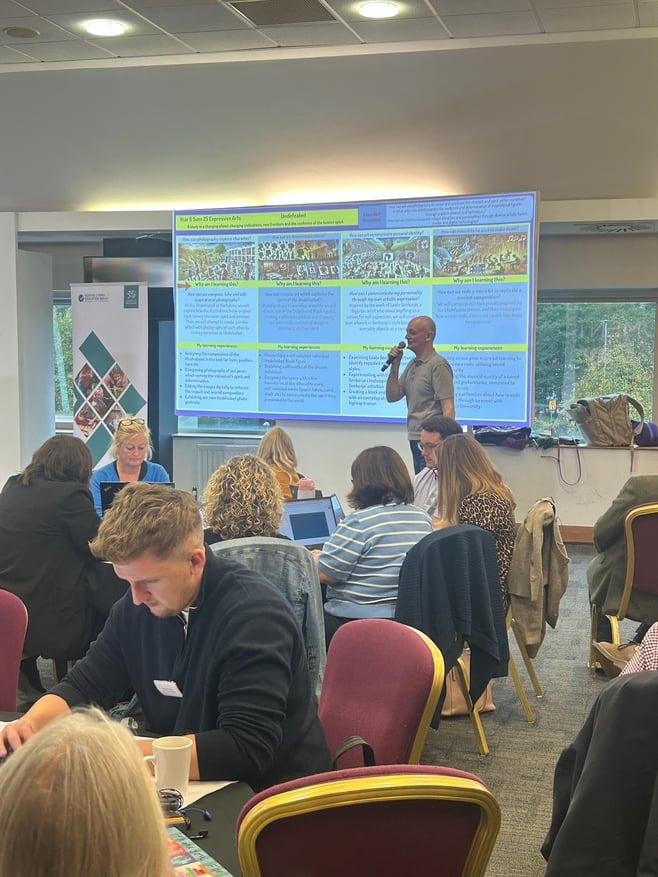
In Part 1, we explored the origins and context of Wales’ embrace of curriculum storyboarding. In Part 2, we examined real Year 5 storyboards to see exactly what this approach looks like in practice. Now let’s examine why storyboarding aligns so powerfully with the principles of the Curriculum for Wales—and what lessons other education systems can learn.
### **1. Making Purpose Visible**
**The Principle:** The Curriculum for Wales demands that schools articulate *why* learning matters. Purpose isn’t an afterthought—it’s fundamental to developing meaningful curricula.
**How Storyboarding Delivers:** The “Why am I learning this?” sections force explicit articulation of relevance in student-friendly language. When Year 5 learners see that they’re learning expanded multiplication to support their real Grow £5 enterprise project, or developing photography skills to “reveal and celebrate the strength and spirit within ourselves,” purpose becomes tangible rather than abstract.
Traditional curriculum documents might list objectives. Storyboards answer the learner’s most important question: *Why should I care?*
### **2. Showing Progression as Journey**
**The Principle:** Welsh curriculum emphasizes progression based on learners’ personal development, not just content coverage. Learning is understood as a continuous journey of growth.
**How Storyboarding Delivers:** The narrative structure naturally illustrates how learning builds sequentially. In the “Undefeated” storyboards, learners can see themselves progressing through a meaningful narrative:
- Analyzing character in illustrations
- Capturing character in photographs
- Expressing spirit through silhouette portraits
- Communicating personal identity through diverse media
Learners aren’t checking off disconnected topics—they’re advancing through chapters of their own learning story.
### **3. Inviting Authentic Engagement**
**The Principle:** A school’s curriculum should be everything a learner experiences in pursuit of the four purposes. It’s not simply what we teach or how we teach, but crucially, *why* we teach it.
**How Storyboarding Delivers:** Traditional curriculum documents are written *for* learners (or more often, *about* learners). Storyboards speak *to* learners and families, inviting them into the journey. Questions like “How can I communicate my personality through my own artistic expression?” directly address the learner’s experience and identity.
The visual and narrative approach—combined with accessible language and compelling illustrations—transforms curriculum from a compliance document into a genuine invitation.
### **4. Streamlining Complexity**
**The Principle:** Welsh schools have agency to design their own curricula within a national framework. This is empowering but potentially overwhelming.
**How Storyboarding Delivers:** The storyboard format helps practitioners focus on what truly matters. Rather than listing every standard and objective, the Year 5 examples organize learning around five or six powerful driving questions connected by a unifying theme.
This makes complex curriculum design more manageable while maintaining coherence and purpose. Teachers can see the forest (the narrative arc, the big purposes) without getting lost in the trees (individual lessons and activities).
### **5. Enabling Authentic Integration**
**The Principle:** Curriculum for Wales expects learning to be purposefully designed across Areas of Learning and Experience, with cross-curricular skills embedded throughout.
**How Storyboarding Delivers:** The storyboards don’t artificially force connections. Instead, they reveal how learning naturally integrates when organized around authentic questions and themes:
- The Maths storyboard shows how mathematical thinking supports enterprise, art creation, outdoor navigation, and financial planning
- Humanities research informs artistic creation
- Geometry enables storytelling through 3D models
- Measurement skills apply to cooking, athletics, art, and environmental stewardship
This is the kind of authentic, purpose-driven integration the Curriculum for Wales framework envisions—not contrived “integration” for its own sake.
## **Lessons for the Global Education Community**
Wales’ systematic embrace of curriculum storyboarding—exemplified by the Year 5 “Undefeated” series—offers crucial insights for educators and systems worldwide.
### **Lesson 1: Narrative Matters**
**The Insight:** Stories engage us in ways that bullet points and standards lists never will. When we frame curriculum as a journey with meaning and connection, we invite deeper engagement.
**The Application:** The “Undefeated” theme provides a powerful throughline that makes learning about photography, financial literacy, geometry, and music composition feel connected and purposeful. Without the narrative thread, these might feel like random topics. With it, they become chapters in a coherent story about resilience, identity, and human potential.
**For Other Systems:** Consider how your curriculum could be organized around compelling themes and questions that provide narrative coherence across subjects and time periods.
### **Lesson 2: Autonomy Needs Structure**
**The Insight:** Wales gave schools agency to design their own curricula but didn’t leave them without support. The storyboard template provides structure without being prescriptive—a scaffold that enables creativity rather than constraining it.
**The Application:** The Year 5 examples use a consistent format (driving questions, “Why am I learning this?”, learning experiences) that provides clarity while allowing schools to customize content, themes, and approaches to their learners’ needs.
**For Other Systems:** When giving educators autonomy, provide frameworks and exemplars that guide without dictating. The sweet spot is between total prescription and overwhelming freedom.
### **Lesson 3: Clarity is Kindness**
**The Insight:** When curriculum documents are impenetrable, we exclude the very people who need to understand them most. Clear, visual, narrative curriculum design is an act of inclusion and respect.
**The Application:** A parent looking at the “Grow £5” section of the Maths storyboard immediately understands that their child will learn real entrepreneurial skills—financial planning, calculating costs, managing loans—through an authentic enterprise project. No translation needed. No decoder ring required.
**For Other Systems:** Ask yourself: Could a student or parent understand this curriculum document? If not, you’re not just creating a communication problem—you’re creating a barrier to engagement.
### **Lesson 4: Design for the End User**
**The Insight:** The best curriculum documents aren’t written for inspectors or administrators—they’re designed for learners and the families who support them.
**The Application:** The consistent use of “I” and “my” in the Welsh storyboards forces this perspective shift. “How can I communicate my personality through my own artistic expression?” speaks directly to the learner’s experience and identity. It positions them as the protagonist, not the audience.
**For Other Systems:** Review your curriculum documents. Who is the implied audience? Who is doing the action? If your documents speak primarily to teachers and administrators *about* learners rather than *to* learners, redesign them.
### **Lesson 5: Professional Learning is Essential**
**The Insight:** Wales didn’t just hand out templates; they created a comprehensive professional development programme, including 10 virtual sessions facilitated by Welsh Government, extensive asynchronous professional learning, funding for two staff members per school to participate in the programme, and ongoing support that coaches professional through the process of curriculum design.
**The Application:** Creating a storyboard like these Year 5 examples requires deep pedagogical thinking about purpose, progression, and authentic integration. These skills develop through guided practice, collaboration, and reflection—not through a single training session or a template download.
Wales recognized that effective professional learning requires infrastructure. Through its partnership with Eduplanet21, the Welsh Government delivers bilingual, asynchronous professional learning that allows educators to engage with curriculum design concepts flexibly while maintaining consistency across the system. The platform supports schools in aligning their curriculum with the Curriculum for Wales framework that complement the storyboarding methodology.
This technology-enabled approach allows Wales to scale quality professional learning across hundreds of schools simultaneously—a critical consideration for systemic change.
**For Other Systems:** If you want to change how educators design curriculum, invest in changing how they *think* about curriculum. This requires sustained professional learning, not one-off workshops. Consider both the content of professional learning (what frameworks and approaches support curriculum design?) and the infrastructure (how will you deliver consistent, accessible learning at scale?).
### **Lesson 6: Visual Design is Pedagogy**
**The Insight:** The vibrant, engaging illustrations in the Welsh storyboards aren’t mere decoration—they’re an essential part of how the curriculum communicates.
**The Application:** Before reading a single word, learners and families see children actively engaged in meaningful activities. This visual storytelling sets expectations, invites participation, and communicates possibilities in ways that text alone cannot achieve.
**For Other Systems:** Invest in visual design as a core component of curriculum communication. This isn’t about making things “pretty”—it’s about making learning visible and inviting.
#### **The Broader Movement**
Wales isn’t operating in isolation. Curriculum storyboarding has been championed internationally by co-authors Allison Zmuda and Heidi Hayes Jacobs of *Streamlining the Curriculum: Using the Storyboard Approach to Frame Compelling Learning Journeys (2022)* who have worked with schools across the world. Storyboards emerged as a solution—a way to make learning pathways visible, purposeful, and accessible.
What makes Wales’ adoption particularly significant is the systemic nature of the implementation. This isn’t a few innovative teachers experimenting with a new tool; it’s a national strategy backed by government funding, professional development, and carefully designed resources. Over 350 schools have already participated, with the programme extending throughout 2025-2026 and beyond.
#### **Critical Questions for Implementation**
For systems considering curriculum storyboarding, Wales’ experience raises important questions:
- How do we balance structure and flexibility? The template provides a framework, but schools need latitude to adapt to their context and learners. Too much prescription defeats the purpose; too little support leaves educators overwhelmed.
- What professional learning is needed? Creating effective storyboards requires skills in narrative design, visual communication, and pedagogical thinking. What ongoing support do educators need?
- How do we ensure equity? All learners deserve curriculum that is clear, purposeful, and inviting. How do we ensure that storyboarding benefits schools serving the most marginalized communities, not just those with existing capacity?
- How do we assess impact? What evidence would demonstrate that storyboarding improves student engagement, family understanding, and learning outcomes? How do we gather that evidence without creating new compliance burdens?
#### **The Road Ahead**
Wales’ curriculum reform is still in its early stages, with all schools now implementing the framework through Year 10. The use of curriculum storyboarding will undoubtedly evolve as more schools engage with the approach and share their learning.
But the fundamental principle is already clear in examples like the Year 5 “Undefeated” storyboards: When we make learning visible—when we show learners and families not just what we’re teaching but why it matters and how it all connects—we transform education from something that happens *to* learners into something they actively join and shape.
In a world where student engagement and purpose-driven learning are more critical than ever, Wales’ embrace of curriculum storyboarding offers a compelling model. It reminds us that curriculum design isn’t just about *what* we teach or even *how* we teach it—it’s about telling a story that invites every learner to see themselves as the protagonist in their own educational journey.
And isn’t that a story worth telling?
#### **A Final Note on the Examples**
The Year 5 Expressive Arts and Maths and Numeracy storyboards featured throughout this series are examples from a Welsh school realising the Curriculum for Wales. They demonstrate how the storyboarding approach works in practice, transforming curriculum communication from dense documents to engaging visual narratives that speak directly to learners and families.
These aren’t aspirational prototypes—they’re working documents being used in actual classrooms to guide learning, engage families, and help learners understand the purpose and progression of their education.
---
*This is Part 3 of a 3-part series on Wales’ use of curriculum storyboarding.
Read Part 1: [Introduction to Curriculum Storyboarding](https://allisonzmuda.com/making-learning-visible-wales-bold-experiment-with-curriculum-storyboarding-part-1-of-3/)
Read Part 2: [Curriculum Storyboards in Action](https://allisonzmuda.com/curriculum-storyboards-in-action-inside-a-year-5-classroom-part-2-of-3/)*
*For more information about Wales’ curriculum storyboarding resources, visit the*[*Hwb Tools and Templates page*](https://hwb.gov.wales/curriculum-for-wales/designing-your-curriculum/tools-and-templates-for-curriculum-design/#curriculum-storyboarding)*.*

### Allison Zmuda
Allison Zmuda is an international curriculum consultant with over two decades of experience helping schools design educational systems that are dynamic, engaging, and relevant.
[mailto:allison@allisonzmuda.com](mailto:allison@allisonzmuda.com)
[](https://allisonzmuda.com)
#### Pages
- [Home](https://allisonzmuda.com)
- [About](https://allisonzmuda.com/en/about)
- [Services](https://allisonzmuda.com/services)
- [Storyboards](https://allisonzmuda.com/en/curriculum-storyboards)
- [Insights](https://allisonzmuda.com/insights)
- [Resources](https://allisonzmuda.com/resources)
- [Contact](https://allisonzmuda.com/contact)
---
- Terms and Services
- Privacy Policy
Powered by HubSnacks [Follow us on Facebook](https://www.facebook.com) [Follow us on LinkedIn](https://www.linkedin.com) [Follow us on Twitter](https://www.twitter.com)
```json
{
"@context" : "https://schema.org",
"@type" : "BlogPosting",
"author" : {
"@type" : "Person",
"name" : "Allison Zmuda",
"url" : "https://allisonzmuda.com/insights/author/allison-zmuda"
},
"dateModified" : "2026-01-07T14:21:47.581Z",
"datePublished" : "2026-01-07T14:21:47.000Z",
"headline" : "Why Curriculum Storyboarding Works: Lessons from Wales (Part 3 of 3)",
"image" : [ "https://allisonzmuda.com/hubfs/IMG_8201.jpeg" ],
"mainEntityOfPage" : {
"@id" : "https://allisonzmuda.com/insights/why-curriculum-storyboarding-works-lessons-from-wales-part-3-of-3",
"@type" : "WebPage"
},
"publisher" : {
"@type" : "Organization",
"logo" : {
"@type" : "ImageObject",
"url" : "https://allisonzmuda.com/hubfs/az-logo-edit.png"
},
"name" : "Allison Zmuda"
}
}
```