
Rethinking Curriculum Design: Connecting Mapping to Storyboarding

- 4 mins
In a recent live conversation, Bena Kallick and Heidi Hayes Jacobs discussed the evolving landscape of curriculum design, focusing on the connection between curriculum mapping and curriculum storyboarding.
“The interesting thing that happened is, as Bena mentioned, we have decades of work on mapping,” said Jacobs. “But one thing that started to happen was that the maps themselves had gotten very cumbersome and dense … The big breakthrough came in conjunction with the work you Bena and Allison have done on student-centered learning.”
Kallick noted the disconnect that often arises when curricula are designed primarily for teachers.
“When it was dedicated entirely to teachers, they would read the map, but then they would go and do the things that they did with kids, and the two had a certain disconnect,” she explained. “With storyboarding, you start by wanting to tell a story.”
Jacobs added that it’s crucial for students to see the connections across their learning journey. “If the student doesn’t see the connections across the year, it isn’t only that we want to tell the story; it’s how can they learn and make meaning,” she said. “What we started to call them were unit silos. Well intended, beautifully designed in curriculum maps, but unit silos that weren’t connected.”
Kallick pointed out the importance of addressing concerns regarding the effectiveness of mapping.
“One of the frequently asked questions is, if I already have a great map, why would I keep doing this?” she said. “People are a little fearful that we’re going to send them back rather than create something that brings them forward.”
Both educators emphasized that storyboarding offers a fresh, creative approach.
“The deliberate use of language that’s student-friendly, along with images that capture the essence of what’s in the story, is key,” Jacobs noted. “The storyline really has a great sweep and is made very deliberately to connect.”
As their conversation unfolded, the pair acknowledged the excitement surrounding storyboarding.
“What I keep seeing is that getting a first draft is definitely possible, that you get a good, fresh view on what it is that you’re teaching,” Kallick said. “The creative aspect is what really jumps out.”
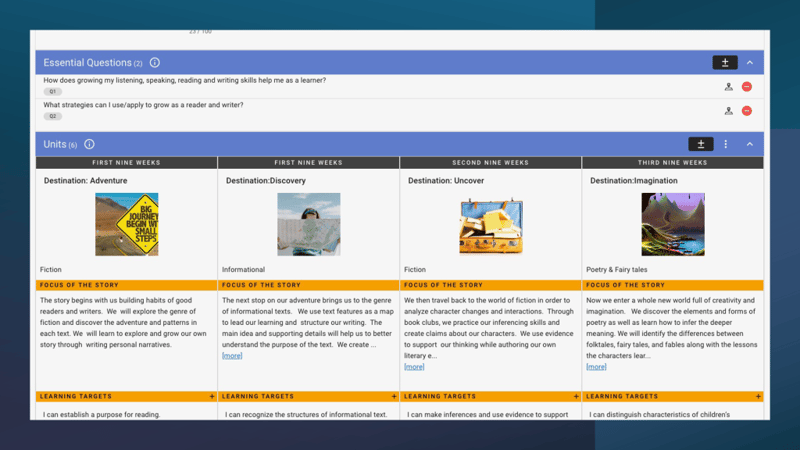
In closing, Jacobs highlighted the transformative potential of storyboarding in education. “What we’re finding is that the narrative makes everything so real,” she said. “It’s about telling a story by making sure you’re communicating what really matters most to your students.”
As educators continue to adapt to changing educational landscapes, the move from mapping to storyboarding may be a pivotal step in fostering deeper connections in the classroom.
Are You Interested in Working with Storyboards?
Heidi, Allison and the team are offering virtual coaching, in-person workshops, and more. If you are interested in learning more, please reach out!