How do the core components of curriculum storyboards connect with UDL principles? How do those connections influence our designs? This is the first post of a 3-part series exploring the relationship between Curriculum Storyboards and Universal Design for Learning (UDL).
Nothing happens without engagement or the “why” of learning. Simply put, if a learner doesn’t see a reason why they should learn something. They likely won’t put in the attention or commitment to learn it. (UDL Now! CAST, 2022)
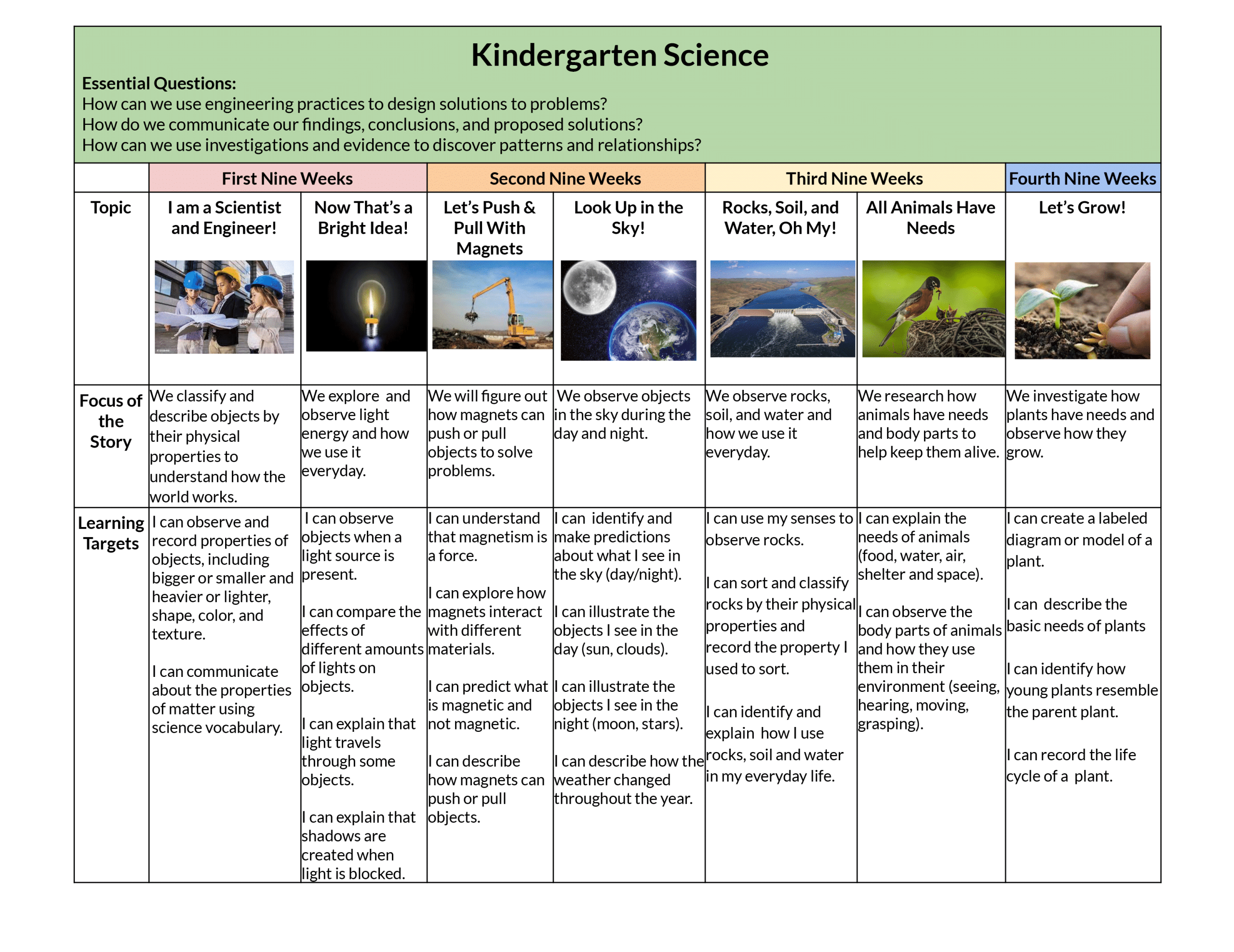
The curriculum storyboard asks each unit to have a compelling title, image, and focus of the story that connects and engages the reader to the content. It helps frame relevance and purpose for the learner and their families.
Second, readers of the storyboard can see the progression of the storyline as it builds from one unit to the next. The flow of meaning making and engagement is strengthened as learners connect the story from one unit to the next.
The idea is that students need to understand why you, the educator, have made the choice of focusing learning on this particular topic or subject. And when you communicate that narrative in clear, accessible, compelling language it invites students as partners in the learning experience and clarifies for families how they can support their learners at home.
We encourage you to examine one of their sample storyboards with the following reflective prompts in mind: